| Criterion | Reported value | Planning use |
|---|---|---|
| Age | 50 to 80 years | Outside this range, you fall outside the standard criteria. |
| Smoking history | 20 pack-years | Work this out from packs per day and years smoked before you book anything. |
| Recent smoking | Smoking now, or quit within the past 15 years | Former smokers need to know their quit date, because it decides whether they are still in range. |
| Frequency | Once each year | Plan a yearly appointment rather than a one-off scan. |
These figures come from criteria published by Atrium Health Floyd Harbin and Chinese Hospital in San Francisco.
Who qualifies for lung cancer screening comes down to age, smoking history and recency: adults aged 50 to 80 with 20 pack-years who still smoke or quit within the past 15 years, screened annually.
Lung screening is one item on a wider schedule. Our guide to preventive health screenings by age shows where it sits alongside other checks. The sections below follow the order you would actually work through it.
Phase one: check your age and smoking status
Start with the two facts you can confirm in a minute: your age and when you last smoked. Screening criteria describe adults between 50 and 80 years old who have smoked cigarettes within the past 15 years, according to Atrium Health Floyd Harbin. Smoking is linked to at least 80% of lung cancer deaths, which is why the criteria centre on smoking history, as Chinese Hospital explains.
Current smokers and former smokers
The recency rule is what answers the question about former smokers. If you still smoke, the recency condition is met. If you quit, what matters is how many years have passed since your last cigarette. A former smoker who quit within the past 15 years can still qualify, provided age and pack-years also fit. Someone who quit long before that window has closed falls outside the standard criteria, even with a heavy history.
A quick screening check
- Confirm your age. You should be between 50 and 80 years old.
- Note your last cigarette. Write down the year you quit, or note that you still smoke.
- Count the years since quitting. The gap should be within 15 years.
- Move on to pack-years. Age and recency alone do not qualify you.
Phase two: calculate your pack-years
Pack-years measure how much you smoked over time by combining daily packs with years smoked. Multiply packs per day by the number of years you smoked at that rate. The reference examples from Atrium Health Floyd Harbin show how different habits reach the same total.
| Daily amount | Years smoked | Pack-years | Planning use |
|---|---|---|---|
| 1 pack per day | At least 20 | 20 | The simplest case: a steady pack a day. |
| 2 packs per day | At least 10 | 20 | Heavier smoking over a shorter period reaches the same total. |
| 0.5 pack per day | At least 40 | 20 | Lighter smoking needs far more years to reach the same total. |
The worked examples above are published by Atrium Health Floyd Harbin as three routes to 20 pack-years.
If your habit changed over time
Most people did not smoke the same amount every year. Split your history into stretches, work out each stretch using the formula, then add the results together. Be honest about heavier periods, because the figure goes on your record and shapes the decision.
Where pack-years fall short
Pack-years are an imperfect measure of tobacco exposure. A review described by the International Lung Cancer Network called pack-year history an imperfect and biased measure of cumulative tobacco exposure. In that analysis, only 57.6% of Black lung cancer patients would have qualified under the 2021 USPSTF criteria, compared with 85.3% if a 20-year smoking duration replaced the pack-year threshold. For Black women the share rose from 42.5% to 63.8% under the duration rule. If you smoked lightly for many years and land just under the threshold, raise it with your provider rather than ruling yourself out.
Phase three: talk it through before the scan
Qualifying on paper does not mean you should simply book a scan. You will meet with a provider to review your smoking history, as Atrium Health Floyd Harbin describes. University of Maryland Medical System adds that you should discuss the benefits, limitations and risks of screening with your provider. This is the shared decision-making visit, and it suits you best if you arrive with your pack-year working and quit date ready.

Use the visit to ask what a result could lead to. A clear scan is only one possible outcome, and it is easier to cope with an unexpected finding if you have already heard what follow-up looks like.

Phase four: the scan itself
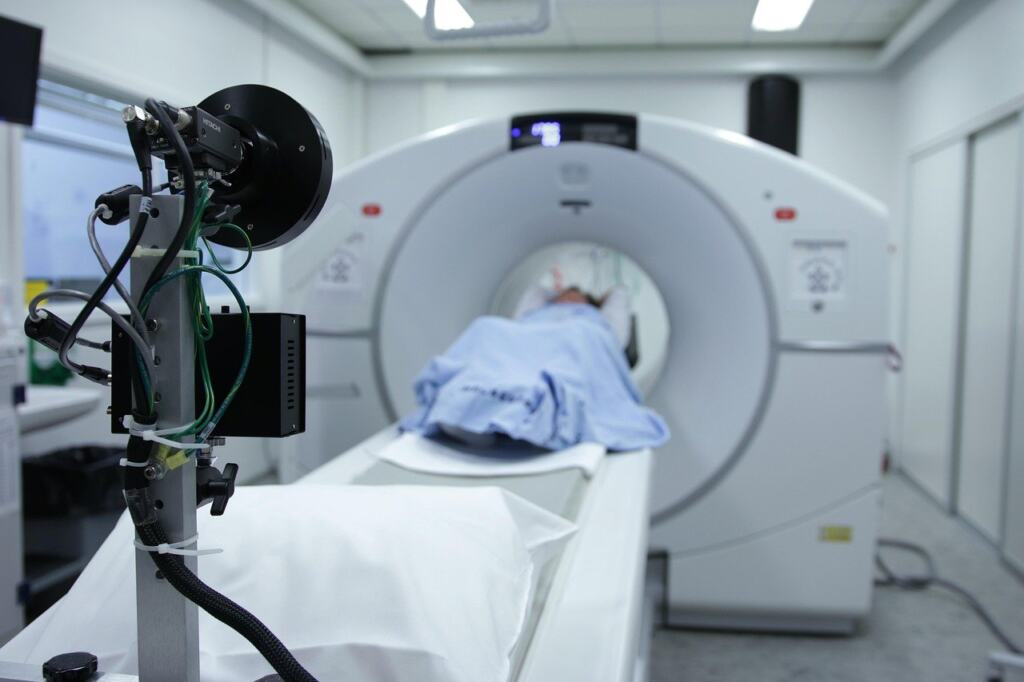
The test is low-dose computed tomography, often shortened to LDCT. It is a painless test that takes about five minutes, and it uses up to 90% less radiation than a traditional CT scan, according to Atrium Health Floyd Harbin. The same page notes that repeated radiation exposure can increase cancer risk, which is one reason to confirm you meet the criteria before starting yearly scans.
The benefit that justifies the visit is a lower chance of dying from the disease. Low-dose CT screening has been shown to reduce lung cancer mortality by 20%, according to the International Lung Cancer Network. That figure describes people who met screening criteria, so it does not transfer automatically to someone who falls outside them.
Phase five: if the scan shows a nodule
A nodule on your report is common and usually not cancer. More than 90% of lung nodules are noncancerous, according to Atrium Health Floyd Harbin, though you may need to schedule follow-up testing. The radiologist’s report may include follow-up recommendations, which University of Maryland Medical System lists as further testing, a biopsy or a specialist referral.
The practical response is to treat a nodule as a reason to follow the recommended next step, not as a diagnosis. Ask which follow-up option the radiologist favours and when it should happen, then put the date in your calendar.
Staying on schedule and knowing when eligibility ends
Screening is repeated once a year for people at high risk, according to Atrium Health Floyd Harbin. When a scan shows no findings, the doctor may recommend another scan in one year, as University of Maryland Medical System notes.
Eligibility is not permanent. You stop meeting the criteria once you pass the upper age of 80 or once more than 15 years have passed since you quit. Because your quit date moves further away each year, review your status at each annual visit rather than assuming the first answer still holds.
Lung screening is one of several routine checks. Skin checks follow a different rhythm, and the guide on how often should you get a skin check covers that schedule.
Troubleshooting common eligibility problems
- You are just under the pack-year threshold. Check whether you counted heavier years fully, then discuss your history with a provider. Pack-years can understate exposure for some smokers.
- You quit longer ago than the window. The standard criteria do not cover you, but a provider can still advise on symptoms and other risks.
- You are unsure of your history. Estimate by stretches, as described above, and bring your best figures to the visit.
- You are outside the age range. Younger or older adults fall outside the standard criteria, so a shared conversation with a provider is the route to personalised advice.
Frequently asked questions
Is the scan painful, and how long does it take?
An LDCT is painless and takes about five minutes, according to Atrium Health Floyd Harbin.
Do all programs use the same age and pack-year cut-offs?
No. West Cancer Center’s community program asks for individuals between the ages of 55 and 77 with a 30 pack-year history, meaning one pack per day for 30 years, as described on its lung cancer initiative page. That differs from the 50 to 80 range used elsewhere, so check the program you plan to use.
What smoking details go on a written screening order?
The order should include your actual pack-year smoking history and current smoking status. For former smokers it also lists the number of years since quitting, according to West Cancer Center.
How closely is smoking tied to lung cancer deaths?
Smoking is linked to at least 80% of lung cancer deaths, according to Chinese Hospital.