| Stage | What applies | Planning use |
|---|---|---|
| Before starting | Negative HIV test; weight of at least 35 kg for TDF-FTC | Book the test and a weight check first. Treat them as the gate to a prescription. |
| Daily dosing | One tablet daily | Choose a fixed daily cue so the routine does not depend on memory alone. |
| Kidney threshold | TDF-FTC not recommended if estimated creatinine clearance is below 60 mL/min | Ask for a kidney result before the first prescription, not after. |
| Build-up for vaginal sex | At least 20 days of daily pills for full protection | Do not rely on PrEP alone for vaginal sex until that period has passed. |
| Follow-up | Visit about every 3 months, with blood work covering kidney function and bone health | Put the quarterly visit in your calendar when you start. |
Figures above come from the University of Washington PrEP medication guide and the American College of Obstetricians and Gynecologists (ACOG).
Oral PrEP for women how to take: one tablet every day, started after a negative HIV test, with at least 20 days of daily pills before full protection against vaginal sex.
This guide follows the medication through its stages, from the first test to long-term checks. It sits within our wider guide to women’s HIV prevention, which covers the other options and decisions around PrEP.
Before the first pill: tests and tablet choice
Four medications are FDA-approved for HIV PrEP, according to the University of Washington PrEP guide. Two of them are daily oral tablets that combine emtricitabine with a form of tenofovir. Which one suits you depends on how you may be exposed to HIV and on your kidney function.
The two oral regimens compared
| Feature | Tenofovir disoproxil fumarate with emtricitabine (TDF-FTC) | Tenofovir alafenamide with emtricitabine (TAF-FTC) |
|---|---|---|
| Tablet contents | Tenofovir DF 300 mg and emtricitabine 200 mg in one tablet | Tenofovir alafenamide 25 mg and emtricitabine 200 mg in one tablet |
| Dosing | One tablet daily | One tablet once daily |
| Kidney threshold | Not recommended if estimated creatinine clearance is below 60 mL/min | Not recommended if creatinine clearance is below 30 mL/min, unless on chronic hemodialysis |
| Effect on bone and kidney markers | Small bone density decreases that reverse after stopping | More favorable bone mineral density and renal biomarkers than daily TDF-FTC |
Both regimens and thresholds are described in the University of Washington PrEP medication guide.
The kidney threshold row matters because creatinine clearance is the kidney measure the labelling uses. A clinician estimates it from a blood test. TAF-FTC tolerates lower kidney function and shows gentler bone and kidney markers, so it can look like the better choice on paper.
There is one important catch for women. TAF-FTC’s approved indication excludes individuals at risk of acquiring HIV from receptive vaginal sex. The PURPOSE-1 trial did demonstrate efficacy of daily oral TAF-FTC for vaginal exposure, but the labelling has not been extended. For most women, TDF-FTC is therefore the tablet to discuss first. If kidney or bone concerns make TDF-FTC a poor fit, ask your clinician about TAF-FTC or about injectable PrEP for women.
Pre-start checklist
- Take an HIV test. A negative result is required before starting TDF-FTC.
- Confirm eligibility. TDF-FTC is for adults and adolescents weighing at least 35 kg.
- Ask for kidney function results. Request your estimated creatinine clearance so the regimen choice matches the thresholds above.
- Settle the refill plan. The steps for finding a prescriber and paying for visits are in our guide on how to get PrEP.
The build-up period: waiting for full protection
PrEP does not protect from the first tablet. ACOG states that for vaginal sex it takes at least 20 days of daily pills to build up full protection. Until that point, treat your protection as incomplete and plan sex accordingly.
The same period shapes how you judge early side effects. About 16% of people taking daily TDF-FTC develop start-up symptoms, according to the University of Washington guide. These usually peak within the first month and nearly always resolve by 3 months. MedlinePlus lists nausea among the common side effects and notes they are usually not serious and often improve over time.
That pattern gives you a practical rule. Mild stomach upset in the first weeks is a reason to keep taking the pill and mention it at your first follow-up. It is not a reason to stop quietly, because stopping early resets the clock on protection. Persistent or severe symptoms are a reason to call your prescriber sooner.
- Pick one daily cue. Link the tablet to something you never skip, such as brushing your teeth.
- Keep the bottle where the cue happens. A tablet in a bag or a car is easy to forget.
- Note any symptoms. A short note on when they started helps your clinician judge whether they fit the usual start-up pattern.
Daily routine and missed doses
Oral PrEP works only when it is taken consistently. MedlinePlus is direct on this: PrEP is much less effective if you do not take it consistently. Every skipped tablet narrows the margin, which is why the routine matters more than the pill itself.
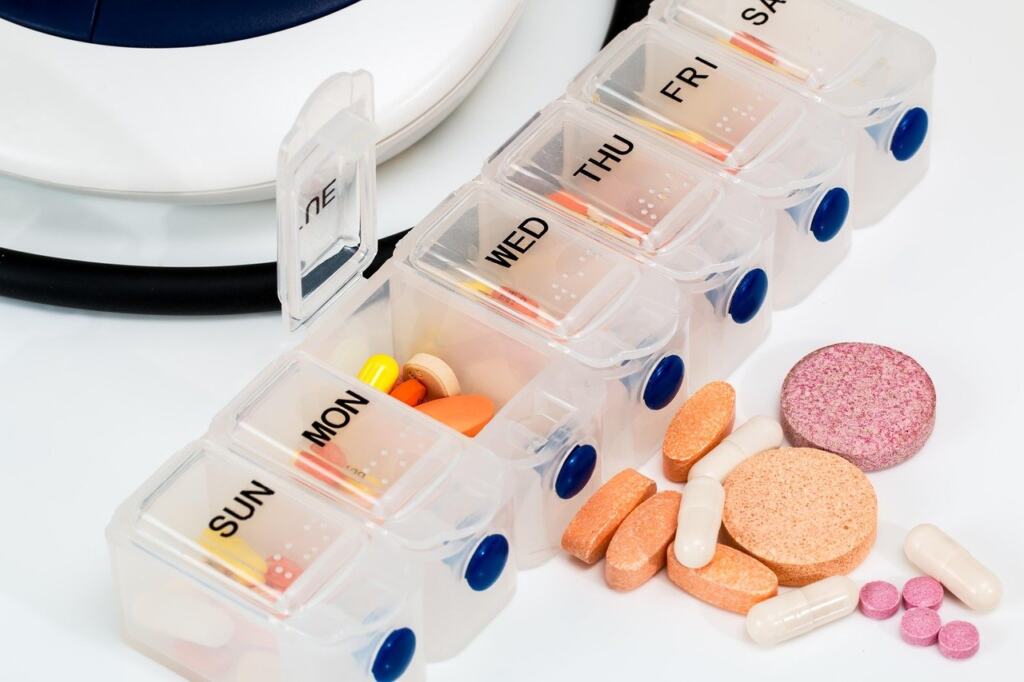
What to do after a missed dose
The sources reviewed here give no dose-by-dose rescue rules, so do not improvise one. Contact your prescriber, clinic or pharmacist as soon as you notice a gap and ask how to restart. Be especially quick to ask if you have missed more than an occasional dose, because protection depends on the pattern across weeks, not on a single tablet.
Habits that prevent gaps
- Weekly organizer. Filling it once a week shows at a glance whether today’s tablet has gone.
- Phone alarm. Set it for the same daily moment and keep it even when your schedule changes.
- Early refills. Reorder before the bottle runs low so a delayed pickup never leaves you without tablets.
- Travel supply. Pack the tablets in hand luggage with a spare day or two, so a delay does not break the routine.
Birth control and pregnancy
ACOG states that PrEP does not affect hormonal birth control. You can use any contraceptive method, including the pill, patch, ring, implant or injection, without changing your PrEP routine or your contraception. That means you can take two daily tablets side by side, such as a birth control pill and PrEP, without a known clash between them. A shared cue, taking both at the same time, can make the habit easier to keep.
For pregnancy and breastfeeding, ACOG notes that research has shown PrEP pills are safe to take during these times. The injectable form is not currently recommended then, which is a useful reason to compare options before you try to conceive. If you are planning a pregnancy, are pregnant or are breastfeeding, tell the prescriber so the plan can be reviewed, and continue the daily tablets unless your clinician advises otherwise.
Kidney and bone monitoring over time
Kidney function and bone health are the two main concerns with PrEP pills, according to ACOG. The reassuring detail is how modest the trial findings are. Renal adverse events in large HIV PrEP trials were similar to, or only slightly more common than, placebo. Decreases in bone mineral density with TDF-based PrEP have been small and have been shown to reverse after PrEP is stopped, per the University of Washington guide.
That is why monitoring is routine rather than alarming. The follow-up rhythm looks like this:
- Visit about every 3 months. ACOG describes quarterly visits with blood work that covers kidney function and bone health.
- Test for HIV every 3 months. MedlinePlus says you must have an HIV test at that interval while taking PrEP.
- Review the regimen if kidney results change. TDF-FTC is not recommended below 60 mL/min estimated creatinine clearance, and TAF-FTC below 30 mL/min unless on chronic hemodialysis.
If you already have kidney or bone concerns, say so before the first prescription. That conversation is the main reason a clinician might choose TAF-FTC, and it is easier to have it before you start than after a lab result prompts a switch.
Frequently asked questions
Does PrEP protect against other infections or pregnancy?
No. ACOG states that PrEP does not prevent other STIs or unwanted pregnancy, so continue using condoms and birth control if you need them.
Can I take PrEP only around the time of sex?
For women, daily dosing is the approved pattern. On-demand use of TDF-FTC is off-label and described for men who have sex with men, and on-demand TAF-FTC has not been adequately studied and is not recommended.
Is the wait for protection different for anal sex or injecting drugs?
ACOG says anal sex needs at least 7 days of daily pills for full effectiveness, while vaginal sex and injection drug use need at least 20 days. The Centers for Disease Control and Prevention recommends TDF-FTC as PrEP for people who inject drugs.
How well does daily oral PrEP work?
MedlinePlus says it reduces the risk of getting HIV from sex by about 99% when taken consistently.