| Question | What is supported | Planning use |
|---|---|---|
| Cabotegravir schedule | An intramuscular injection in the gluteal region, given one month apart for two consecutive months, then every two months | Book the starting pair of visits first, then keep the two-month rhythm. |
| Lenacapavir schedule | A subcutaneous injection every six months for people weighing at least 35 kg | Confirm weight eligibility, then plan two clinic visits a year. |
| Common side effect | Injection site reactions are the most common adverse events with cabotegravir, mainly pain and tenderness | Allow for soreness around the injection site after each dose. |
| Visit burden | The CDC notes that six-month dosing may help some people overcome challenges with adherence or regular health care visits | Favour the twice-yearly option if frequent appointments are your main obstacle. |
Figures in this table come from the CDC recommendation summarised on HIV.gov and the University of Washington PrEP medication guide.
Injectable PrEP for women means a long-acting injection given in a clinic instead of a daily pill: cabotegravir every two months or lenacapavir every six months. The better fit often turns on visit frequency and eligibility.
This page sits within our wider guide to women’s HIV prevention, which sets injections beside pills and other methods.
What the schedules mean for your calendar
Injectable PrEP swaps a daily habit for booked appointments, so the practical question is how reliably you can reach a clinic. The NIAID describes the licensed long-acting option as an injectable antiretroviral given once every two months, and lenacapavir stretches that gap to twice a year. UC Davis Health contrasts this with daily pills or shots given every 4-8 weeks.

- Cabotegravir suits people who can keep a regular rhythm. After the two starting injections one month apart, the maintenance dose falls every two months, so the calendar needs to be protected across the whole year.
- Lenacapavir suits people for whom visits are the barrier. The CDC says the six-month schedule may help some people overcome challenges with adherence or more regular health care visits, such as work shifts, caring duties or travel to a clinic.
- Daily pills suit people who prefer to manage dosing themselves. Our guide to oral PrEP for women how to take covers that route.
Once the rhythm looks workable, the next decision is which product matches your circumstances.
Choosing between cabotegravir and lenacapavir
Both injections are approved options, but they differ in schedule, injection route and eligibility rules. Choose by comparing what each asks of you rather than assuming the newer one is automatically better.
Who can get lenacapavir twice-yearly PrEP
The CDC recommends lenacapavir, given every six months as a subcutaneous injection, for all people weighing at least 35 kg. The University of Washington guide states that it is indicated for adults and adolescents at that weight to prevent sexual acquisition of HIV. UC Davis Health adds that all individuals are eligible, including people at risk through receptive vaginal sex. For women, this means no special category is needed beyond the weight threshold.
Points that tilt the decision
- Choose lenacapavir if you want the fewest appointments and meet the weight threshold.
- Choose cabotegravir if you can attend every two months and prefer a product with a longer record of use in clinics.
- Consider a different method if you would rather avoid injections entirely. The dapivirine vaginal ring is a separate, non-injected option worth comparing.
- Raise pregnancy plans early. ACOG notes the injection is not currently recommended while pregnant or breastfeeding, whereas oral PrEP is considered safe in that situation.
The longer record of use mentioned for cabotegravir reflects its earlier FDA approval, covered in the FAQ below. How well each option protects is the next consideration.
Effectiveness for women
For women, the PURPOSE 1 trial is the most relevant study for lenacapavir, and its daily oral comparator arm used TAF-FTC. The CDC reviewed two trials and reported that lenacapavir demonstrated strong efficacy in preventing HIV infection among both females and males, with no serious safety concerns and a high certainty of evidence.
UC Davis Health reports that more than 99.9% of participants taking the twice-a-year shot remained HIV negative during PURPOSE 1 and PURPOSE 2. That is a retention figure across both studies, not a promise of individual protection, and it should be read alongside the trial conditions.
Comparison with daily pills
The oral comparator in PURPOSE 1 is informative in its own right. The University of Washington guide notes that the daily TAF-FTC arm demonstrated efficacy among women with high adherence. Pills can therefore work well, but only when taken consistently. The practical argument for an injection is that dosing no longer relies on remembering a pill every day, not that pills are ineffective.
Side effects and cautions
Injection site reactions are the main reported effect for both products. For cabotegravir, the University of Washington guide lists them as the most common adverse events, with pain and tenderness the usual symptoms.
For lenacapavir, the most common side effect in the clinical trials was a reaction at the injection site, according to UC Davis Health. This can include a firm, tender nodule under the skin, and nausea and headache were uncommon.
- Expect local effects first. Soreness or a lump at the site is the pattern to watch, so tell the clinic if it is troublesome.
- Disclose pregnancy or breastfeeding. This affects whether an injection or oral PrEP is recommended.
- Keep the visit schedule. Because each dose is given by a clinician, side effects are best discussed at the next appointment rather than by changing the schedule yourself.
How the injections work
HIV pre-exposure prophylaxis (PrEP) is medicine used to lower the chance of acquiring HIV. Injectable versions deliver it as a long-acting dose rather than a daily tablet.
Lenacapavir is a capsid inhibitor with multiple sites of action in the HIV life cycle. It is given under the skin. Cabotegravir is given as a 3 mL intramuscular injection in the gluteal region, at a dose of 600 mg as a 200 mg/mL solution.
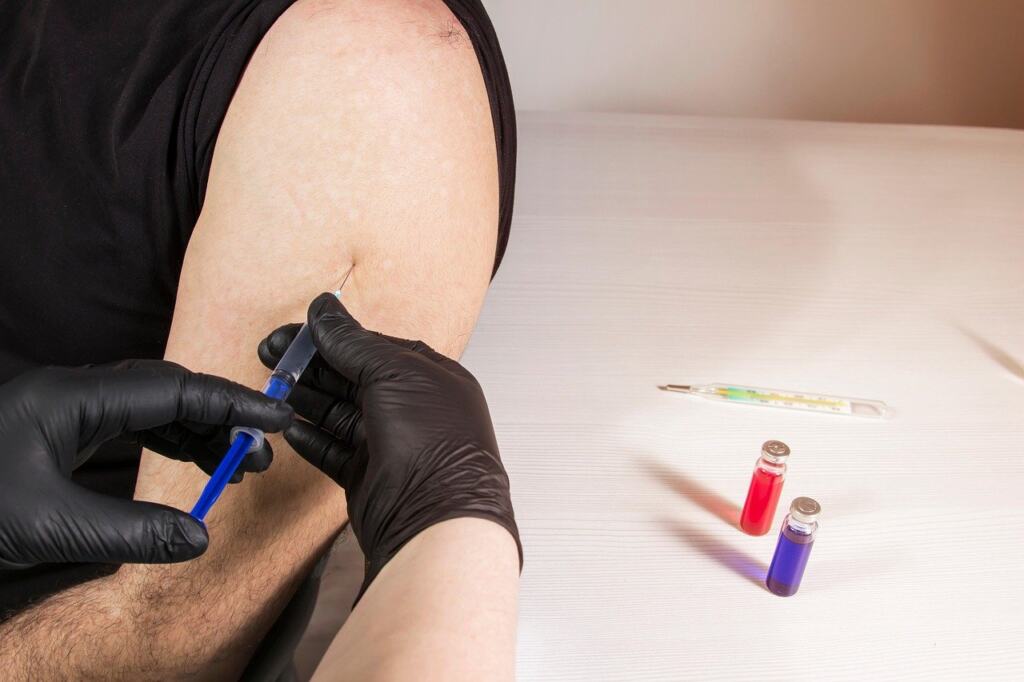
Because both are given by a clinician, the next practical issue is where and how you can obtain them.
Access, clinic visits and insurance
Lenacapavir is a prescribed medication, and UC Davis Health explains that the shot must be given in a medical setting. A referral to an infectious diseases or PrEP clinic may be needed, so ask your primary care clinician or gynaecology practice how local access works before relying on a single provider.

On cost, ACOG says most health insurance and Medicaid plans are now required to cover PrEP. Before booking, ask your plan how it covers the specific injection you want, including the clinic visits and any testing attached to it.

Frequently asked questions
How many PrEP medications has the FDA approved?
The University of Washington guide counts four FDA-approved medications: TDF-FTC, TAF-FTC, CAB-LA and LEN-SQ. The first two are daily pills and the last two are the long-acting injections.
When were the injections approved?
ACOG reports that the FDA approved the injection given every two months in 2021. The agency approved injectable lenacapavir in June 2025.
How well does PrEP protect when used correctly?
ACOG states that, when taken correctly, PrEP lowers the risk of getting HIV from sex by about 99 percent. The qualifier matters, because protection depends on taking each dose on schedule.